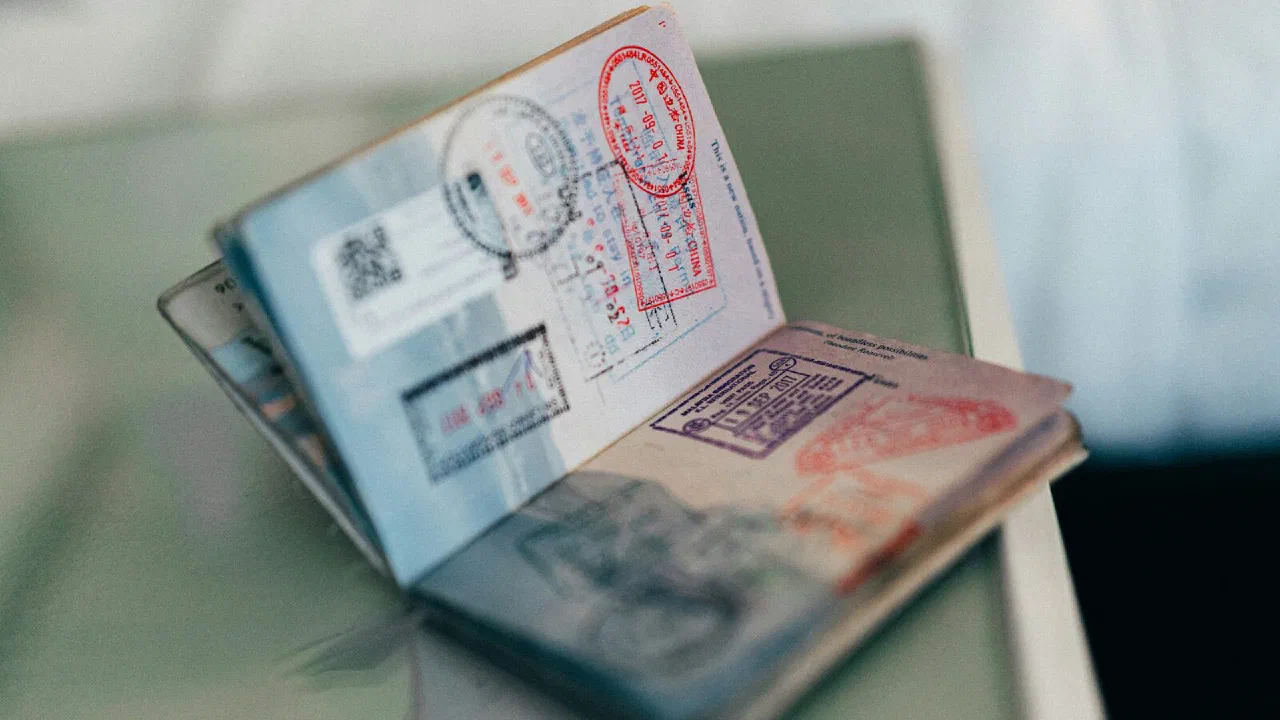
Most nationalities get ninety days in Ecuador per year, counted from the day of first entry — not ninety days per trip, and not ninety days per calendar year. You can extend once, by up to ninety more continuous days, for a fee set at one third of the Salario Básico Unificado. That is the whole allowance: roughly six months, and then it stops.
If you are coming to Cuenca, Ecuador on a scouting trip, this is enough and you can stop reading after the counting section. If you are hoping to string these together into a life here, it does not work, and the reason is the phrase from first entry.
Checked on 2 September 2026 against the Ley Orgánica de Movilidad Humana as cited on the Cancillería’s own trámite pages, and the migration authority’s extension page.
The counting rule, and the mistake everyone makes
The law gives a tourist a period of stay of up to ninety days in the period of one year, counted from their first entry.
Three consequences, and people miss all three in the same conversation:
It is a budget, not a per-visit allowance. Thirty days in February, thirty in May and thirty in August is ninety days. You are done for that year, and the September trip is the one that gets you turned around.
The year runs from your entry, not from January. If you first landed on 14 March, your ninety days are measured across the twelve months beginning 14 March. A new calendar year in the middle of that changes nothing.
Leaving does not reset it. This is the expensive misunderstanding. The border run works in some countries; it does not work here, because the clock is anchored to your first entry rather than to your most recent exit. Flying to Lima for a weekend on day 88 buys you a weekend in Lima.
I have watched people arrive committed to the ninety-day shuffle, on the strength of a forum post written about some other country, and discover the arithmetic in month five with a lease signed. It is a bad month.
Who gets the ninety days without applying for anything
Most readers of this site — American, Canadian, British, Australian, most of Europe — arrive without a visa and are admitted into that ninety-day allowance.
Nationals of the countries on Ecuador’s régimen especial list — 46 of them, including China, India, Cuba, Venezuela, Nigeria, Pakistan, Bangladesh, the Philippines and Vietnam among others — need an approved tourist visa before travelling. That is applied for as a trámite in its own right, and the published fees are $50 to apply and $30 on grant, no IVA.
If you hold one of those passports, the practical difference is that your trip has a lead time and a refusal risk that a Canadian’s does not, and any “just fly down and look around” advice was not written for you. Check the current list before you book; countries move on and off it.
The extension: one, ninety days, one third of the SBU
The migration authority — the Ministerio de Gobierno’s migration service — grants an extension of authorised stay of up to ninety additional continuous days, and the trámite page is explicit that it is prorrogable por una sola vez: extendable once, and only once.
The fee is defined as one third of the Salario Básico Unificado. Not a fixed dollar amount. With the 2026 SBU at $482, set by the Ministerio del Trabajo in December 2025, that is $160.67, checked 2 September 2026.
Now go and look at what the internet tells you this costs. You will be told $150, repeatedly and confidently, on pages that rank well. One third of $450 is $150, and $450 was the SBU in 2025. Those pages are not lying to you; they are simply written by people who wrote down the answer instead of the rule. This is the single clearest illustration of why every figure on this site carries a date and, wherever possible, a multiple.
Requirements are short: a valid passport and the extension request. It is done online through the migration service’s site, or in person at one of the Servicio de Apoyo Migratorio offices around the country.
On timing, the official page does not publish a specific window. Community advice commonly says to apply in the last ten days of your ninety. What the page does establish is that this is an extension of an authorisation that is still running, so the safe reading — and the one I would act on — is to file comfortably before your initial ninety days expire rather than after. Do not leave it to day 90 and a website you have not used before.
Six months is the ceiling, and it is a hard one
Ninety days, plus ninety days, once. There is no third grant, the year is measured from your first entry, and no exit resets it.
That is genuinely useful for one thing: a proper look at the city before you commit. Six months in Cuenca is long enough to sit through a rainy season, work out whether 2,560 metres agrees with you, walk the neighbourhoods you were going to choose between from a website, and sign nothing you cannot walk away from. I would recommend it to most people over a two-week trip and a decision.
What it is not is a way of living here. And the reason is not that someone will come looking for you. It is that everything you need in order to actually settle is downstream of a document you cannot get as a tourist.
What a tourist cannot do here
Without a residency visa there is no cédula, and without a cédula, in my six years of watching people run into this in order:
- Banks and cooperativas will not open you an account. This is the wall people hit first, and it is why the money question and the visa question are the same question.
- A lease cannot be registered in your name in the way the Ley de Inquilinato contemplates, which matters much less on the day you sign and much more on the day of a dispute.
- IESS voluntary affiliation is not available to you, so the public health option is closed and private cover is your only route.
- Utilities, contracts and anything requiring an identity number in the Ecuadorian system become somebody else’s-name arrangements, which is fine until it is not.
None of that is a legal threat. It is friction, and it compounds. The visa is not really the goal — the card is the goal, and the visa is how you get it.
What to do with the six months instead
If you are using the tourist allowance the way it is actually useful — as a long look before committing — spend it on the things that are hard to judge from abroad and cheap to judge here:
Start the visa paperwork while you are still a tourist. Apostilles happen in your home country and take weeks. Order them before you fly, or have someone at home order them, because the one thing you cannot do from Cuenca is stand in a queue in your own state capital.
Decide the route on the shape of your income, not on what is easiest to say at a dinner party. The routes ranked by cost is the overview; if you have a certified monthly pension, the jubilado visa is almost certainly it.
Get health cover sorted early, because the residency application asks for it and because you should not be uninsured at altitude in a foreign country for six months regardless.
Do not sign a year’s lease in month one. Whatever you save, you will lose it choosing the wrong part of the city from the wrong information. That is a stack of posts of its own and it is worth waiting for the neighbourhood you actually want.
Sources
- Ley Orgánica de Movilidad Humana, Art. 56, as cited on the Cancillería’s Concesión de visa de visitante temporal turista 90 días trámite page on gob.ec — the ninety days in one year counted from first entry, the special-regime country list, and the $50 / $30 tourist visa fees per Acuerdo Ministerial No. 0000026.
- Ministerio de Gobierno / migration service, Emisión de prórroga de autorización de permanencia en territorio para extranjeros on gob.ec — one extension only, up to 90 additional continuous days, fee equal to one third of the SBU, passport and request as requirements, online or at Servicio de Apoyo Migratorio offices.
- Ministerio del Trabajo, Acuerdo Ministerial MDT-2025-195 of 15 December 2025 — the 2026 SBU of $482, from which the $160.67 extension fee is computed.
Read on 2 September 2026. The extension fee is a third of the SBU; when the SBU changes each January, so does it.