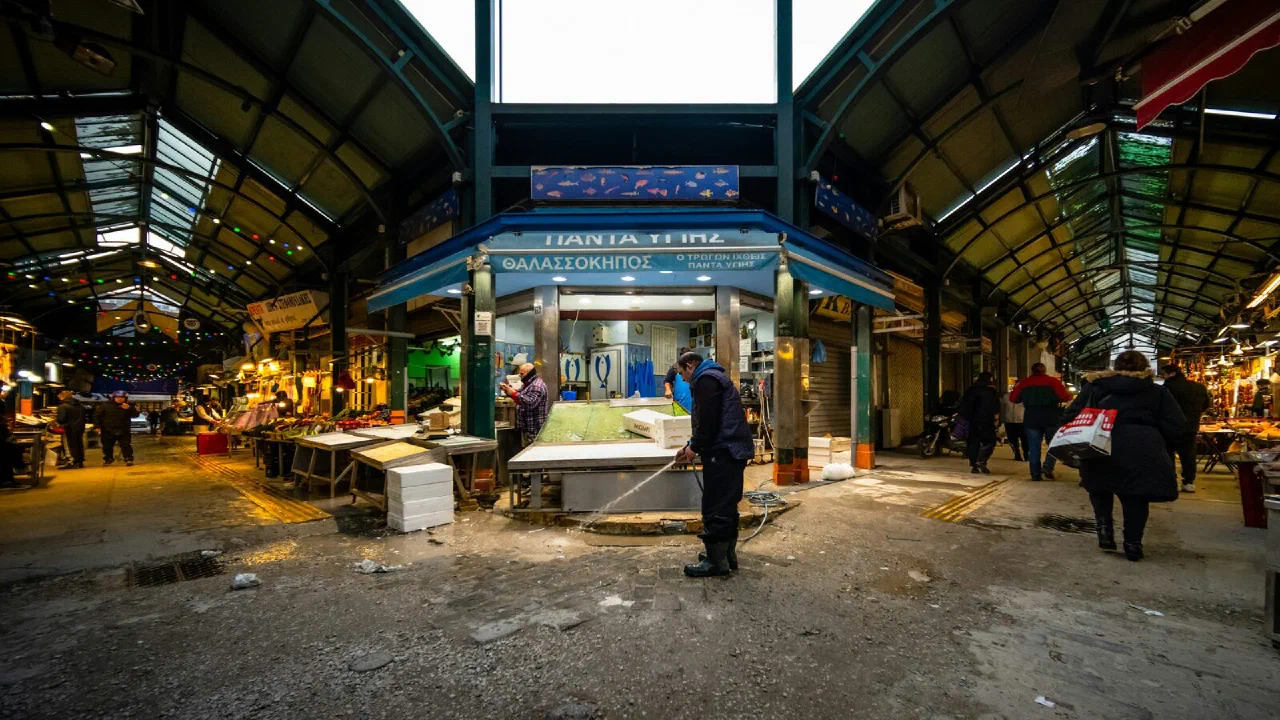
Rent decides your Cuenca cost of living, insurance decides your worst month, and everything else is small. Two people living in Cuenca, Ecuador on a fixed dollar income can land anywhere across a wide band, and almost the whole spread between the bottom and the top of it sits in three lines: what you pay for the flat, what you pay to be covered, and how much of your shopping basket was made somewhere else. Get those three right and the rest of the month is noise.
That is not the answer the pages selling the move give, and it is not because they are lying. It is because a single monthly total is the most repeated and least useful number in this subject. Mine would be no better than theirs. So this post does something different: it gives you the line items in the order they actually hit your account, and against each one, what state the figure is in — published and dated, or moving, with the place you check it yourself.
Everything below was checked on 17 September 2026.
The one national figure worth anchoring to, and why yours is out of date
Ecuador publishes an official cost-of-living basket, and if you have read a relocation page that quotes one, it is almost certainly quoting a series that no longer exists.
In July 2026 the Instituto Nacional de Estadística y Censos replaced the Canasta Familiar Básica — in continuous use since 1982 — with a new Canasta Familiar Básica de Consumo. The new basket holds 98 articles, 37 of them food and 61 not, priced for a reference household of four. It runs on a July 2025–June 2026 base rather than the old 2014 one, and it assumes an average of 1.82 earners per household where the old series assumed 1.60. In its first month, July 2026, it came to $825.17. From August 2026, INEC publishes it on the tenth working day of each month.
The single most important thing about that number is the thing INEC itself says about it: the new basket is not comparable with the old one. The methodology changed. So any page telling you Ecuador’s basic basket costs about $800, or about $760, or about $700, and treating that as a trend line running back through the last decade, is comparing two different measurements and calling the difference inflation.
This is the first of several places on this site where a confident figure from last year is not slightly stale, it is measuring something else. It will not be the last.
Two caveats before you lean on $825.17 at all:
- It is a four-person Ecuadorian household, on Ecuadorian consumption patterns. You are probably two people, and you buy differently.
- It is national, not Cuenca. The city is in the highlands, it is not Quito and it is not Guayaquil, and the basket does not tell you which way that cuts.
What it is good for is a floor and a sanity check. If someone quotes you a monthly total for two foreigners that sits below the national basket for a family of four, ask which lines they dropped. Usually it is the insurance and the flight home.
What a foreign household adds to that basket
These are the lines that exist on your budget and do not exist on the reference household’s. They are also, collectively, most of the difference between what a page selling the move quotes and what you actually spend.
Health cover. Ecuadorian households in the reference basket are largely inside IESS through payroll. You are not, and you have to buy your way in or buy around it. Whichever you pick — voluntary affiliation, a private Ecuadorian policy, an international policy, or cash — it is a real monthly line, and at 65 it is not a small one. The four routes are compared in the health post, and the one the visa application will accept is a separate purchase from the one you want to live on.
The foreigner price on rent. It is real, it is not universal, and it is not a scandal — it is what happens when one side of a negotiation does not know the market and is visibly in a hurry. It belongs in your budget as a percentage on top of the local rent rather than as a number. That percentage gets its own post.
Residency, amortised. The visa is not a monthly cost, but it is a cost, and pretending it is a one-off distorts your first year badly. Month one is priced separately for exactly this reason.
The trip home. Flights, and the fact that money you send back out of Ecuador is taxed on the way. The ISD is the line nobody selling the move mentions, and it is one of the few figures on this page that is published, exact and dated.
Imported goods. Everything on your shelf that was made elsewhere carries the whole chain — the import duty, the freight, the shipping and the tax on the money that paid for it. This is the single most consistent surprise for arrivals from the United States, and it is the whole of the dollarisation post.
What a foreign household takes out of it
Fairness runs both ways, and these are genuinely cheaper than the equivalent line at home.
Transport, if you do not keep a car. The urban bus fare in Cuenca is 30 cents. The technically recognised fare is 40 cents and the Municipality covers the remaining 10 cents as a subsidy, an arrangement running since 1 February 2026. That is the whole of a transport budget for a lot of people here, and it is the strongest argument for choosing a flat inside the network rather than a cheaper one outside it.
Produce, if you buy it where it is sold. The market and the supermarket are two different price levels for the same vegetables, and the gap is large enough to matter monthly.
Labour. The Salario Básico Unificado for 2026 is $482 a month, fixed by the Ministerio del Trabajo through Acuerdo Ministerial MDT-2025-195 of 15 December 2025 and effective 1 January. That single figure explains most of why services here — a cleaner, a repair, a consultation, a taxi — cost what they do relative to the same service at home. It also resets every January, and so does everything priced off it.
Utilities. Water, power and gas are all cheaper than the North American equivalent, and at this altitude you are not paying to heat or cool a flat, which is usually the largest single line people expect to bring with them and do not.
The month, itemised — with the state of every figure
Here is the structure. The right-hand column is the point of the table: it tells you which lines you can plan against today and which ones you have to go and find out for yourself.
| Line | What decides it | State of the figure |
|---|---|---|
| Rent | Neighbourhood, furnished or not, whether you negotiated | Moves. Listings and agencies; the foreigner premium applies |
| Building fees | Whether the building has a lift, a guard, a gym | Moves. Asked at the viewing, in writing |
| Water (ETAPA) | Household size and the tariff band | Moves. ETAPA publishes its tariff |
| Electricity (Centrosur) | Consumption band | Moves. Centrosur publishes its tariff |
| Gas cylinder | Cylinders used per month | Moves. A subsidised domestic price applies |
| Internet | Provider, speed, building | Moves. Quoted per building, not per city |
| Transport | Bus, tranvía, taxi or a car | Published. 30¢ urban bus fare, subsidised since 1 Feb 2026 |
| Groceries — local | Market against supermarket | Moves. The two differ enough to budget separately |
| Groceries — imported | How much of your basket is from home | Moves, and structurally higher. See the dollarisation post |
| Health cover | IESS, private, international or cash | Moves with age and route |
| Phone | Plan or prepaid | Moves. Quoted by the operator |
| Household help | Hours, frequency | Moves, and floored by the SBU at $482 |
| Money going home | How often, and how much | Published. ISD at 5% above an exempt amount |
| Residency, amortised | Route, dependents, renewals | Published fees, spread over two years |
Fourteen lines. Three of them are published. That ratio is the honest state of this subject, and it is why a page that gives you all fourteen to the dollar is telling you about one household — usually the author’s, usually a few years ago — rather than about the city.
The three lines that decide your cost of living here
If you are trying to work out whether your income covers this, do not build the whole table. Build three lines and treat the rest as a rounding error, because that is what they are.
- Rent. It is the largest line and it is the one with the widest spread. The same flat is priced differently in El Centro and in the south of the city, and the same flat is priced differently to you than to the person who lived in it before you. Everything else on the table put together will not move your total the way one neighbourhood decision does.
- Health cover. Not because the monthly premium is large, but because the range is. A 65-year-old choosing between voluntary affiliation, a private Ecuadorian policy and an international one is choosing between numbers that are not within sight of each other, and the choice is partly made for you by what will underwrite you.
- Imported share. How much of your weekly shop, your wardrobe and your electronics comes from outside Ecuador. This is the line people cannot estimate before arriving, because at home it was invisible. Here it is the difference between a cheap month and an ordinary one.
Rent and health are the first two things to settle, and they are settled in that order, because the second one is portable and the first one is a twelve-month signature. The lease has its own clauses that cost money.
What I will not print, and where you check it
I am not going to give you a rent figure, a grocery total or a monthly bottom line, and the reason is not coyness.
Rents here move, they vary by street rather than by neighbourhood, and the number a foreigner is quoted is not the number a local is quoted. A dollar figure printed today is wrong within a season and wrong for half the readers on the day it is published — and it is precisely the kind of number that gets copied onto other pages, undated, where it hardens into a fact. The pages ranking for this query are full of them, and a good share of them trace back to somebody’s actual flat in about 2019.
What I can tell you is where each moving line is actually settled:
- Rent — the listings, the agencies and the groups. Which of those are real is its own problem.
- Water and power — ETAPA and Centrosur publish tariffs. Ask the outgoing tenant for the last three bills before you sign, in writing. This is the single most useful thing you can do at a viewing and almost nobody does it.
- Health cover — quoted to you, by age, after underwriting. Nobody can quote it in advance.
- Imported goods — the supermarket shelf. Walk one before you commit to a budget.
- The national basket — INEC, monthly, on the tenth working day.
What a scouting trip will and will not tell you
A lot of readers of this site come for two weeks first, and it is the right thing to do. It is also, for this particular question, a partly misleading instrument, and knowing which half to trust is worth the price of the flight.
What the trip settles honestly. Whether you can live at 2,560 metres, which is the single largest unknown for most people and cannot be answered from a page — the altitude is a decision, not a diagnosis. What the neighbourhoods actually feel like, at the hours you would be in them. What is on the supermarket shelf and at what price, which is the imported-share line, priced by walking round with your own basket in your head. What a consultation costs, if you use one.
What it distorts. Everything with a lease attached. A visitor pays short-stay rates for accommodation, eats out far more than a resident does, takes taxis rather than the bus, and buys nothing that gets amortised over years. Two weeks of that is not a twelfth of a monthly budget, it is a different category of spending, and people routinely extrapolate it in both directions — concluding the city is dearer than it is, or, having stayed somewhere cheap, cheaper.
The useful exercise while you are here is not to track what you spend. It is to fill in the right-hand column of the table above: walk into a supermarket, ask one landlord what a twelve-month lease costs against a monthly one, ask one insurer for a quote at your age. Three questions, an afternoon, and you go home with the three lines that matter instead of a fortnight of holiday receipts.
What changes in January, on a schedule
This is the part that makes a budget for Cuenca different from a budget anywhere else, and it is the thing to build into your first year.
Every income threshold in Ecuador’s residency system is a multiple of the SBU, and the SBU is reset each December for the year that follows. The 2026 figure is $482, so three times it is $1,446, and that multiple is doing work in more places than you would expect — it is the pensioner visa’s income threshold, and it is also the exemption on money you take out of the country. Both move on 1 January, together, without anybody writing to tell you.
So: plan in multiples, not in dollars. “Three times the SBU” survives January. “$1,446” does not. If your margin over a threshold is thin enough that a December announcement can close it, that is worth knowing in September rather than in February.
The same goes for the basket above. The figure will be restated every month, and the series it belongs to is two months old. Come back to the source rather than to this page.
The rest of the money posts
Money in this country has four separate problems — getting it in, holding it somewhere, paying for things with it, and getting it back out — and they have almost nothing to do with each other. One at a time, with the figures dated and the gaps admitted.
- Opening a Bank Account in Cuenca: Banks, Cooperativas, and What Each Asks For — Ecuadorian banks and cooperativas in Cuenca, Ecuador: why the cédula is the gate, and the deposit-insurance ceiling that decides where money sits.
- Dollarised, Not American: Where the Dollar Buys Less Than You Expect — Ecuador dollarisation for a resident of Cuenca, Ecuador: what the US dollar genuinely buys you, and the four places it buys less than at home.
- The ISD: What Ecuador Charges When Money Leaves, and the Exemptions — The ISD in Ecuador is 5% on money leaving, exempt up to three times the SBU. What that means for a resident of Cuenca, Ecuador moving money home.
- Getting Money In: Social Security Deposits, Wires, and the ATM Ceiling — The four routes money takes into Cuenca, Ecuador — a direct pension deposit, a wire, an ATM and a card kept at home — and the ceilings on each one.
- "Ecuador Doesn't Tax Foreign Income": The Shape of the Question — Does Ecuador tax foreign income? The sentence everyone repeats describes a rule removed in 2021 — what replaced it, from Cuenca, Ecuador.
- The Setup Cost: What Month One Costs Before You've Lived It — What the first month in Cuenca, Ecuador costs before any living happens: the published fees, the housing upfront, and the cash-flow ceiling.