Have the conversation with your own doctor before you book the flight, and have it specifically: not “is Ecuador all right”, but “I am considering living at roughly two and a half thousand metres — does anything on my file change because of that?” That is the whole of the medical content of this post, and it is deliberate. This site does not do symptom lists and does not do clinical guidance.
What it can do is put altitude where it belongs in the decision: as a fact about the city that the pages selling the move leave out, and as an access-and-cost question with real consequences for insurance, for travel, and for where in the valley you choose to live.
The number, and how loosely to hold it
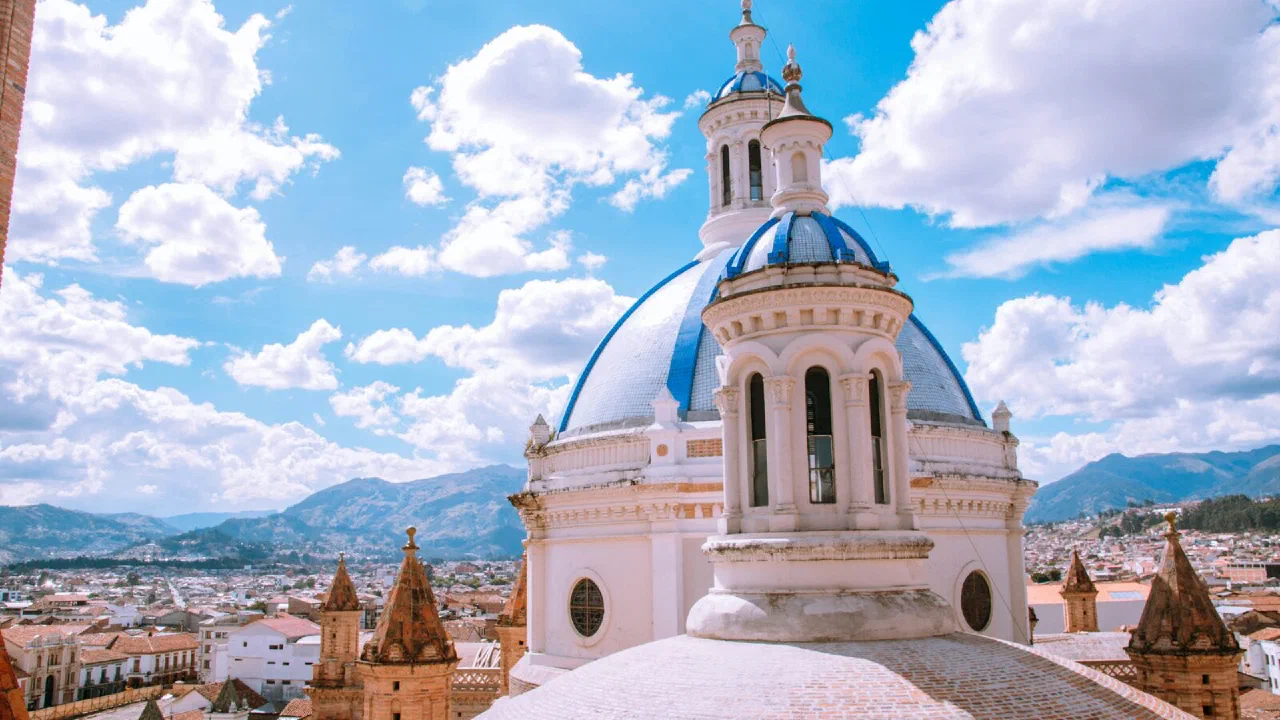
Published figures for Cuenca cluster around 2,550 metres above sea level — that is the elevation given for the city in reference sources, read 4 September 2026 — and you will see numbers between roughly 2,500 and 2,560 quoted depending on where in the city the measurement is taken. The valley is not flat. The centre sits lower than the ground rising to the east, and a flat in Challuabamba is not at the same elevation as one off the Tomebamba.
For planning purposes the spread does not matter. What matters is the band: this is a city around two and a half thousand metres, which is high enough to be a real variable and not so high as to be exotic. Quito is higher. Denver is lower. If you have flown into and functioned in a city at this sort of elevation before, you have your own data point, and it is better than any generalisation.
What I will not do is tell you how you will feel. People differ enormously, the difference is not predictable from fitness or age, and every page that tells you “most people adjust in a few days” is describing a population you may not be in.
Why it belongs in a decision post rather than a health post
Three practical consequences, none of them clinical, all of them things that cost money or time.
The first fortnight is not a fair sample of your life here. People arrive, feel flattened for a week or two, and make decisions in that state — signing a lease, deciding the city is wrong, deciding the city is right. Whatever you are feeling in week one is not the steady state. Do not sign a year’s lease in it if you can avoid it. There is a post on when short-term stops being the cheap option and this is one of the arguments for taking the short-term hit at the start.
It changes what a scouting trip is for. If altitude is a live question for you, a scouting trip is not a sightseeing exercise; it is the test. Come, stay longer than a weekend, and see what happens. That is a far better use of a fortnight than reading about it, including reading this.
It interacts with where you live in the valley. The lower parts of the city and the valleys beyond it sit a little lower and a little warmer, and for some people that is a real preference rather than a marginal one. The lower valleys trade the tranvía for warmth, and the neighbourhood decision is arithmetic with this as one of its inputs.
The conversation to have with your doctor
Not a checklist of symptoms. A short list of the things worth raising, so that the appointment is useful:
- That you are considering living — not visiting — at around 2,550 metres, indefinitely. Living somewhere and holidaying there are different questions and the second one gets a different answer.
- Every medication you take, and whether any of them warrants a conversation in that context.
- Anything cardiac or respiratory on your file, however historic.
- Whether they want to see you again before you go, and whether they want anything checked.
- What they would want a doctor in Ecuador to know, so you can carry it with you.
Ask for point five in writing, and ask for it with generic drug names rather than brand names. Brand names do not travel; generic names do. That is the vocabulary the pharmacy here works in.
If your doctor’s answer is that this is a bad idea for you, that is a real answer and it is one nobody who profits from the move will ever give you. It is also rarer than the internet suggests. Get it from a person who has your file.
The insurance angle nobody mentions
Two things worth asking before you buy cover, both of which are about paperwork rather than physiology.
Ask the insurer whether anything in the policy turns on altitude or on residence at elevation. Travel and expatriate policies sometimes carry exclusions written for mountaineering that are drafted loosely enough to be worth a question. The answer is almost always that living in a highland city is unremarkable — but get it in writing rather than assuming, because the time to discover a clause is not when you are claiming under it. Get every exclusion listed, in writing, after underwriting is the general rule and this is a specific case of it.
And ask about the condition, not the country. If you have something cardiac or respiratory on file, the underwriting question is about that condition, and the exclusion — if there is one — will be written against it rather than against the city. IESS and the private market differ most sharply on exactly this, because the public system does not underwrite you on entry at all.
What changes about ordinary life
Undramatically, and this is the part long-stayers agree on more than any other:
- Things take a little longer to cook, because water boils lower. This is genuinely the most common practical remark you will hear, and it is a mild nuisance rather than a problem.
- The sun is stronger than the temperature suggests. A cool day at this elevation is still a day with a lot of ultraviolet in it. Behave accordingly, year-round.
- The climate is even rather than warm. The city’s reputation for a narrow annual temperature range is earned, and the phrase “eternal spring” is doing a lot of marketing work — the honest version is that it is mild, it is often wet, and evenings are cold indoors because buildings here are not heated. The climate gets its own post, and the unheated-building point costs more comfort than the altitude does.
- Exercise feels different at first. For how long, and how much, is exactly the thing this post will not predict for you.
The verdict
Altitude is a reason to have one conversation and take one scouting trip. It is not a reason to rule the city out from a desk, and it is not a footnote either — it is one of the two facts about Cuenca that the relocation pages systematically omit, and a 68-year-old deciding whether to come is entitled to have it stated plainly rather than discovered on arrival.
Ask your doctor. Come and see. Do not sign anything in the first fortnight.
Sources
- Reference sources for the city’s elevation, giving approximately 2,550 metres above sea level for Cuenca, read 4 September 2026. Published figures vary by a few tens of metres depending on the measuring point within the valley, and this post uses the band rather than a single figure for that reason.
There is no clinical content above, and none is intended. Altitude appears on this site as a decision and an access question only; the medical question belongs to a doctor who has your file.