Four routes get money into Cuenca, Ecuador, and you will probably use two of them at once: a recurring deposit for the income you live on, and something else for the lump sums. The good news is the part nobody tells you — nothing taxes money arriving in Ecuador. The tax is on the way out, and it catches people precisely because they assumed the friction would be symmetric.
The bad news is that every route has a ceiling, the ceilings are set by institutions rather than by the country, and none of them is published anywhere you can read in advance. So this post is about the shape of each route and the question to ask about each ceiling, which is the part that is durable.
Checked on 17 September 2026.
Nothing is charged on the way in
Worth stating first because it reverses most people’s expectation.
Ecuador’s Impuesto a la Salida de Divisas is exactly what its name says — a tax on currency leaving. Money arriving is not the taxable event. The ISD post has the rate and the exemptions, and the single structural fact to carry from it is that in and out are not mirror images. You can move money here freely and be surprised later.
What arriving money does attract is a compliance question — not a charge. Ecuadorian institutions are required to understand where funds come from, and a foreigner with no local income is the file with the least locally verifiable history. That is a documents problem, not a tax problem.
Route one: the pension, deposited directly
If your income is a United States Social Security benefit, the clean version of this is International Direct Deposit — the payment goes into your Ecuadorian account instead of to a US address or a US bank.
The Social Security Administration publishes country-specific direct-deposit sign-up forms, and
the one for Ecuador is numbered SSA-1199-OP75. Get the current version from ssa.gov
itself rather than from a third party — including from here. Forms in this family get revised
and a facilitator’s downloaded copy from two years ago is exactly how a filing gets bounced.
Three practical notes, none of which is financial advice:
- You need the Ecuadorian account first. Which means the cédula first. This is why the sequence in the banking post matters more than it looks: you cannot instruct the deposit until the destination exists.
- The form asks the bank to certify the account details. Expect to take it to your branch rather than complete it at your kitchen table.
- Confirm your own eligibility with the SSA before you move, not after. Rules about payments to beneficiaries outside the United States are the SSA’s own and they are specific to your situation. Ask them directly; do not take the answer from a relocation page, and do not take it from me.
This site states mechanics and stops. When to claim, what to do with a pension, whether to keep Medicare — those are your adviser’s questions and not this site’s, and anybody offering you an answer to them in a blog post about Ecuador is selling something.
If your income is not a US pension — a Canadian one, a private annuity, an employer scheme — the shape is the same and the paperwork is not. Ask the paying institution what it can do for an account in Ecuador before you assume, because “we do not deposit internationally” is a real answer and it changes your whole money plan.
Route two: the wire
For lump sums — a house sale at home, a year’s living costs, the money that sets up a flat — the wire is the instrument, and it has three costs rather than one.
- The sending bank’s fee, which is quoted.
- The intermediary or correspondent bank’s fee, which frequently is not, and which is deducted en route. Ask the sending bank whether the transfer goes through a correspondent and what that will cost. A wire that arrives short by an unexplained amount is almost always this.
- The receiving institution’s inbound fee, if it has one. Ask at the branch.
Because Ecuador is dollarised there is no conversion on either end, which removes the largest cost a wire normally carries. That is one of the genuine benefits of dollarisation and it is worth more on a large transfer than on anything else in your budget.
The thing to plan: a first large wire is also a first large deposit into a new account for a new customer with foreign documentation. Tell the branch it is coming, in advance. A transfer that arrives unannounced into a three-week-old account is the transfer that sits pending while somebody asks questions.
Route three: the ATM, and the three separate ceilings
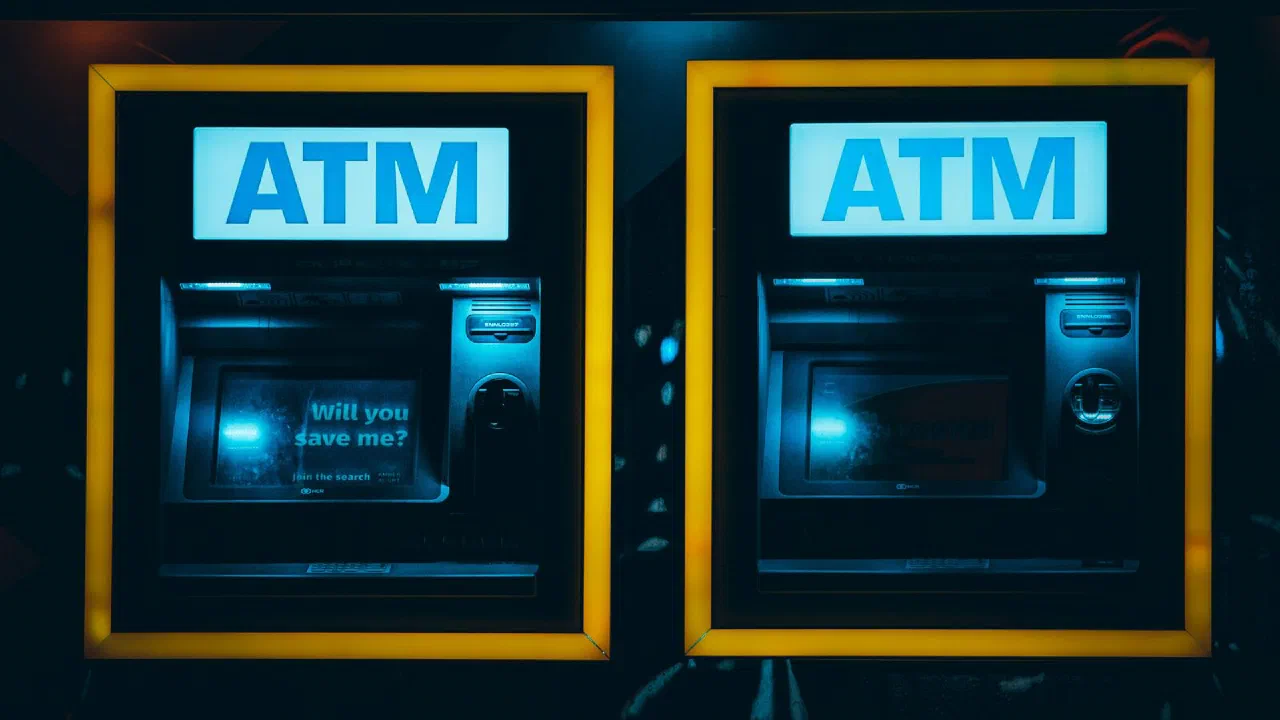
This is the route everybody uses in week one and a surprising number of people are still using in year three. It works. It is also the route where people meet a wall without understanding which wall it was, because there are three and they are set by three different parties.
Ceiling one: your home bank’s daily withdrawal limit. Set by the card issuer, usually adjustable by asking, and usually lower for foreign withdrawals than domestic ones. Raise it before you fly.
Ceiling two: the Ecuadorian machine’s per-transaction dispense limit. Set by the operating institution. This is typically well below your daily limit, which is why people take out the same modest amount two or three times in a row and pay the fee each time.
Ceiling three: the fee, on both sides. The local operator charges for a foreign card, and your home bank charges its own foreign-transaction fee. Neither is exotic and both are per-transaction, which means ceiling two multiplies ceiling three.
None of these three has a figure I am willing to print, because each is set per institution and per card and they change. What is durable is the structure, and the two questions that settle it: what is my daily limit (ask your issuer, before departure) and what does this machine charge and dispense (it is displayed, and it differs between institutions in the same street).
The practical upshot is the ordinary one: fewer, larger withdrawals, from an institution whose machines you have checked, and a card at home whose limits you have already raised. Remember that large bills are awkward here, so take the maximum and break it deliberately.
Route four: the card you never stop using
A real strategy, and the site should say so plainly rather than pushing everybody toward an Ecuadorian account.
Some people live here for years on a card issued at home, paying by card where they can and taking cash out where they cannot, and never open a local account at all. It costs them the foreign-transaction fees and it caps what they can do in a day, and in exchange it removes the cédula-then-branch-then-utility-bill sequence entirely.
It works best if: you have no recurring income to land locally, you are not paying utilities by direct debit, and your spending is ordinary. It works badly if you are furnishing a flat, paying a deposit, or receiving anything regularly.
What it does not do is change anything about the money’s eventual exit. Whichever way it came in, the tax on the way out is the same.
Month one, and the gap in it
Here is the sequence problem that catches nearly everybody, laid out so you can plan around it.
You arrive. You need money immediately — a deposit, a first month’s rent, furniture — and at that point you have no cédula, therefore no account, therefore no deposit instruction and no wire destination. Your only live route is the ATM, with its three ceilings, at exactly the moment your outgoings are the largest they will ever be.
What month one actually costs is the post on the size of that hole. The fix is unglamorous: know your daily limit before you fly, raise it, and understand that the cap is a daily one so a large upfront payment may take several days to assemble in cash. Ask the landlord, in writing, whether a deposit can be paid in instalments across a week. That question is normal, it is asked in Spanish as
«¿Puedo pagar la garantía en dos partes esta semana?»
Can I pay the deposit in two parts this week? — and it has saved more arrivals than any piece of currency advice on this page.
Once the card arrives, all of this becomes ordinary, permanently. It is the six weeks before it that need a plan.