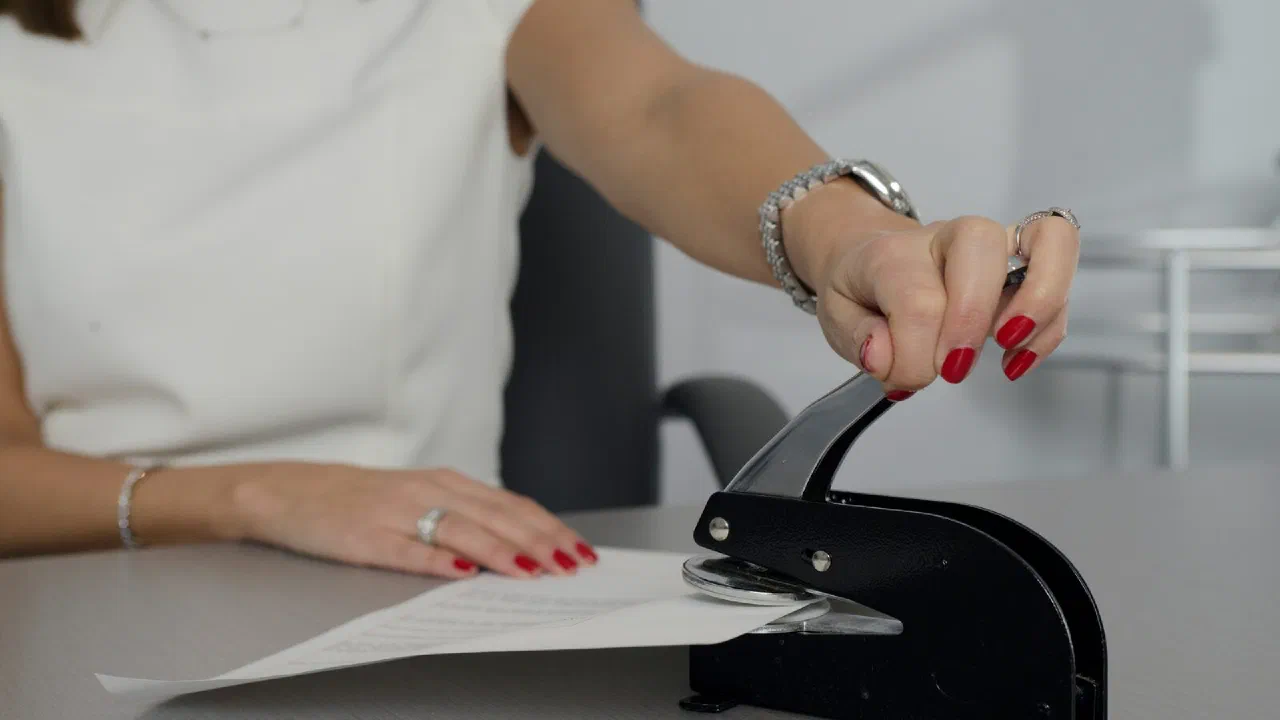
Ley de Inquilinato lease registration is a step your landlord in Cuenca, Ecuador will probably not take, and here is the call: do not make it the fight. Ask once, accept the answer, and then spend the hour you would have spent arguing on the four things that do the same job for you. An unregistered tenancy is the normal case in this city, you are not without a lease because of it, and treating it as a scandal will cost you the flat and buy you nothing.
What it does change is where your evidence comes from. That is the whole of the problem, and it is a real problem — just a smaller and much more fixable one than the phrase “unregistered lease” suggests.
Checked on 6 October 2026.
What registration is, and what I am not going to tell you
Ecuador’s Ley de Inquilinato provides for urban residential leases to be registered with the municipality. That is the step. In Cuenca, that means the Municipalidad — and I am deliberately not giving you a window, a floor, an officer or an opening time, because offices here move and a wrong address costs you a morning. Ask at the front desk which office handles arrendamientos, on the day you need it.
What I am also not going to tell you is which provision says what, what an unregistered lease forfeits as a matter of law, or which remedy runs on which clock. Those are the questions this subject is actually about, they turn on particulars, and they are answered properly by an abogada in a single consultation. Any page — mine included — that hands you a confident summary of a statute’s effect on your specific dispute is selling you a feeling.
So this post stays inside what I can actually report: why the step gets skipped, what changes for a tenant when it is, and what to do instead. All of it observed across three leases in six years rather than read off a page.
Why your landlord skips it
Three reasons, and only one of them is about you.
It makes the rent visible. A registered lease is a document stating what this flat earns every month, held by an institution. A one-flat owner with an undeclared income stream has an obvious interest in that document not existing, and the tax question is between them and the SRI rather than between them and you. This is the main reason, it is rarely said out loud, and it is why the conversation sometimes goes quiet rather than hostile.
It is a morning. Someone has to go, queue, and hand over paper. For a landlord renting one flat to a tenant they expect to keep, that morning has no visible return.
Nobody asks. The custom is settled. Most tenants here, foreign and local, have never registered a lease and have never had a problem, which is both true and the reason the custom survives. Most tenancies end uneventfully. The ones that do not are the ones this post is for.
What actually changes for you
Not your tenancy. You have a lease; you are a tenant; the statute behind it exists whether or not a copy sits in a municipal file. What changes is the cost and the speed of proving anything.
There are three places you feel it.
The deposit. This is where it bites, nine times out of ten. A dispute over a deduction comes down to what the flat looked like when you arrived against what it looked like when you left, and with nothing filed anywhere, the only record of either is whatever the two of you wrote down. If you wrote nothing down, the dispute is decided by whoever is more comfortable in the conversation, and the deposit quietly becomes the last month’s rent. The deposit post deals with this at length, because it is the single most common way money is lost renting here.
Proving where you live. Counters here ask foreigners to prove an address more often than you expect, and what they generally want is a utility bill or a contract. An unregistered contract is still a contract and usually does the job; what helps more is having a utility account in your own name, which is a separate step and worth doing for exactly this reason. Do not rely on an unregistered lease as your only address document.
Any route that assumes a filed document. If a disagreement ever has to go somewhere other than the kitchen table, the first question will be what exists in writing and where. That is the point at which the absence of a registration is no longer an administrative detail, and also the point at which you need an abogada rather than a checklist. If you are reading this because you are already there, stop reading and go and get one.
The four things that replace it
Each of these is free, takes under an hour, and is worth more to you in a dispute than a registration you cannot get. This is the list to work through in the week you move in.
- A signed counterpart of the contract, in your hands. Not a photograph of a page on your phone. Two printed copies, both signatures on both, both identification numbers on the document, and you keep one. If you have only ever seen the contract on someone else’s phone, you do not have a contract — you have a memory of one.
- A dated condition record with photographs, signed by both of you. Walk the flat on handover day, photograph every room and every appliance, list what is there and what state it is in, both sign and date it, staple it to your counterpart. Half an hour. It is the single highest-value unpaid work in this entire process and almost nobody does it.
- Meter readings on the day, in writing, on that record. Water and electricity both. Without them you are liable for a consumption you cannot disprove, and the first bill after a handover is the one that arrives with somebody else’s month on it.
- Receipts for every payment, including the deposit. Transfers leave a trail and cash does not, so if you pay the deposit in cash — common, and sometimes unavoidable before you have a local account — get it acknowledged in writing on the day. One line on the contract is enough: the amount, the date, the word garantía, a signature.
Those four give you the evidence that registration would have given you, in a form you hold rather than a form you would have to request. For a deposit dispute — which is the dispute you will actually have — they are better.
How to ask, once
Ask it as information rather than as a demand, and ask it before you sign rather than after:
«¿El contrato se va a inscribir en el municipio?»
Is the contract going to be registered with the municipality?
You will get one of three answers. Yes, in which case good, and ask for a copy of the proof when it is done. No, with a reason, in which case say fine and move to the four items above. Or a change of subject, which is the same as no.
If the answer is no, the sentence that follows is the useful one:
«Entiendo. Entonces hagamos el inventario con fotos y firmas el día de la entrega.»
Understood. Then let’s do the inventory with photographs and signatures on handover day.
That trade — I drop the registration question, you give me twenty minutes with a camera — has never once been refused on me. It is a good trade for the landlord and a better one for you.
What not to do
Do not threaten with it. Telling a landlord their lease is unregistered, with an implication attached, converts a cooperative person into a cautious one and gets you a tenancy conducted entirely in conversation. You want the opposite.
Do not assume it protects your landlord and not you. The missing document is missing for both sides. An owner with no condition record and no registered contract is also in a weak position in a dispute, which is part of why the handover inventory gets agreed so readily.
Do not conclude you have no rights. You have a tenancy under a statute that exists. What you have less of is cheap, fast proof. Everything above is about manufacturing that proof yourself for the price of an hour.
Sources
- Ecuador’s Ley de Inquilinato provides for municipal registration of urban residential leases; the provision’s content and its effect on a particular dispute are deliberately not summarised here, and that is the question to put to an abogada.
- The SRI is named as the tax authority a declared rental income is visible to. No claim is made here about any individual landlord’s filings.
- No office, address, window or opening time appears above, on purpose. Ask at the Municipalidad de Cuenca’s front desk on the day.
- The three reasons for skipping, the four substitutes, and the wording that works at the table are reported from three leases over six years in this city, observed rather than published, checked on 6 October 2026.